August 15, 2013

Deloitte Art Investment Program in Worst-Best Logo Finals

What is a worst-best logo? It’s a logo that tells the truth without meaning to.  It’s a logo that self-deconstructs. Using Barthes' semiological analysis, a worst-best logo fails miserably at second order (myth) meaning. According to Barthes, the mythological content of a sign may be patently false, but the falsehood is shrouded, obscured, sugarcoated so it goes down without protest. A worst-best logo -- by virtue of ham-fisted design  -- triggers simultaneous comprehension of a third (truth) meaning that negates the pernicious falsehoods the artist meant to convey.  

The grand prize winner is still the (abandoned) logo of the US Chamber of Commerce (see below, Flag as Roadkill and the USCC). By appropriating an image of the US flag, the organization meant to associate its work with patriotism and the interests of US citizens. The clumsy design, however, depicted a desiccated, mangled looking flag and the words “American Free Enterprise. Dream Big.”  The unavoidable upshot was that USSC and its capitalist fantasies undermine the values the flag represents – a truth that the client and designer wished to conceal. For a runner up, see Maid to Clean.

Now comes Deloitte with its Art and Finance program. Though Deloitte promises thoughtful analysis and conservative investment in top tier markets, a more blatantly venal approach to aesthetic delectation is impossible to imagine. Trumpeting the unregulated nature of the art market, they are selling the idea of art works as safe and largely off-the-books placeholders for large amounts of cash. The potential for capital appreciation is a bonus. To convey all that in a logo requires finesse and subtlety. So, let's proceed ... If there’s a bull market in the arts, I guess Wall Street's bull should be represented. And, we should have something to indicate art. How about a picture frame? Let’s make it gold and ornate to suggest 19th century oil paintings. Next … how shall we connect the bull-and-frame dots? Obvious: Why not have the bull-symbol ramming its horn through the art-symbol?  After all, nothing whispers aesthetic intelligence, care and prudence like a fucking bull full on fatally goring the fragile surface of a prized work of art.


All the pretense, all the highfalutin’ conferences, the slicky catalogs, the efforts of the unctuous, compliant art historian-consultants are undermined, cancelled by a dreadful logo that wants to confess.

“We are vandals,” says Deloitte.

(image courtesy of Steve Wynn Branding and Design, Inc.)

July 21, 2013

Interference Archive, Brooklyn

I've been re-reading Steven Heller's Design Literacy and Design Literacy (continued) this summer in preparation for teaching a design theory class next year. Heller's works, among other things, underscore the huge contributions left-wing and counterculture publications have made to graphic design. In that regard, there's a good article in the New York Times today (Sunday, July 21, 2013, page 25) by Maya Lau about Brooklyn’s Interference Archive. The Archive collects and stores publications, posters and other documents and ephemera generated by left and labor politics in the US. Staffed exclusively by volunteers, it also hosts exhibitions, panels, screenings and other events.  The Archive welcomes visits, participation and donations. The Times article gives some interesting background on the organization's founders. 


July 20, 2013

Detroit


Don’t be fooled by the rhetoric swirling around the Detroit bankruptcy. We get the sense that Detroit’s problems are a consequence of bungled public policy, bad schools, greedy public sector unions, etc., all conveyed with the usual racist undertones. Sorry, no … not the case. This is about vulture capitalists picking the bones they were never happy about leaving on the table in the first place … taxes and pensions. This is about Republicans snatching what’s left of the public sector to deliver it to their clients and cronies, who will sell it back to us in the form of privatized schools, security, bridges, roads and water. Detroit is an example of one thing only: business socializing the costs of production and keeping the profits. Modern cities didn’t sprout from the frontier like wild flowers. Detroit grew in order to serve the automobile and other industries. Every dollar the public sector and unions were able to wrench from business was marked by struggle. And, when other venues became convenient for the absorption of social costs without collective bargaining and modest contributions to the public sector, the corporations fled. Well, guess who’s back.

image: Detroit Industry Murals, Diego Rivera (1932-33) (detail)

July 12, 2013

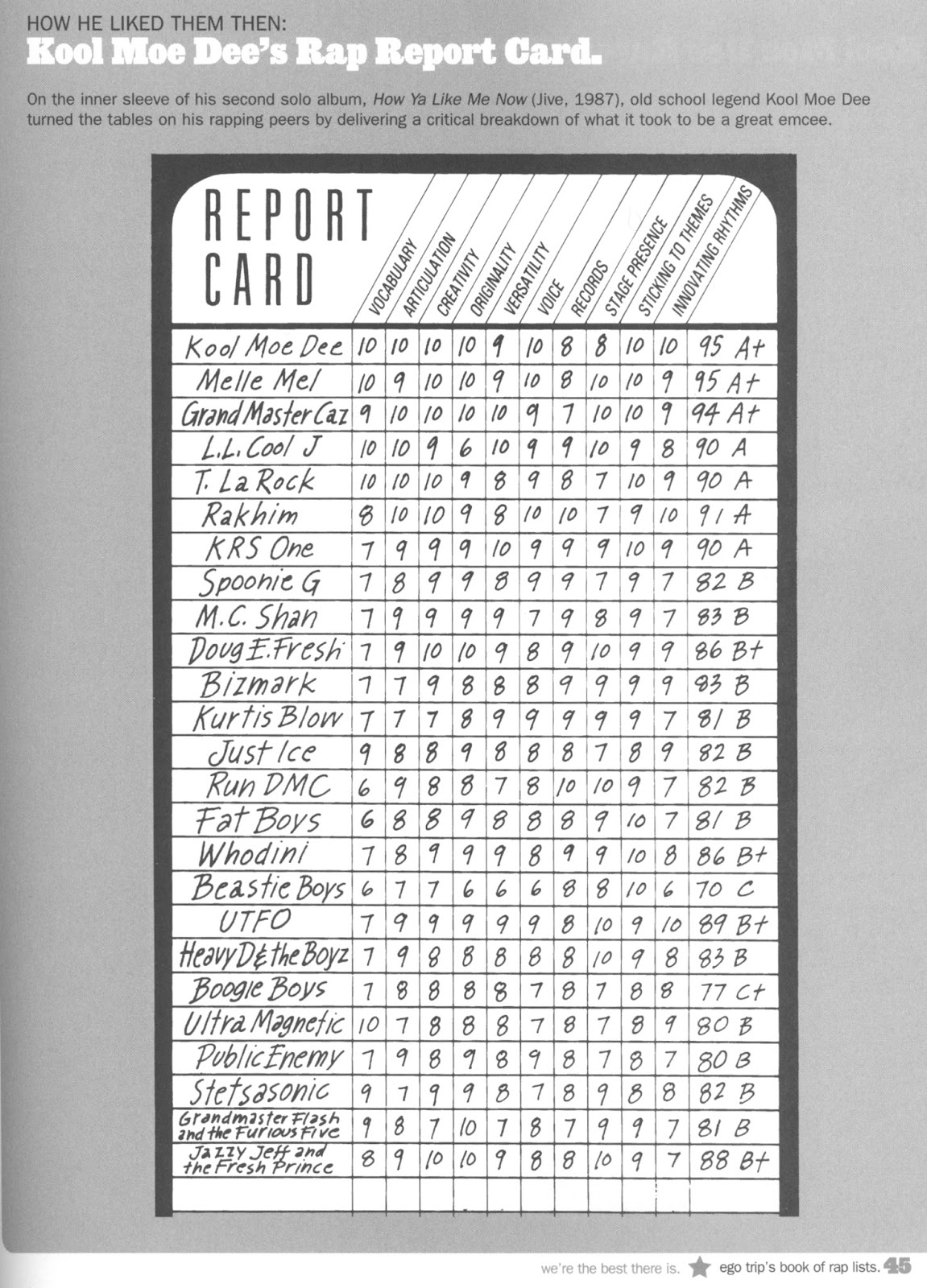
Jay-Z, Kool Moe Dee, Performance Art and Picasso

As to Jay-Z’s July 10 performance of Picasso Baby at Pace Gallery, two pertinent quotes: the first, from Kool Moe Dee's 1987 How You LikeMe Now and the second, from Clement Greenberg’s 1956 David Smith review (where he says Smith is the best of his generation). 

Kool Moe Dee:
Rap is an art
And I'm a Picasso
But of course
Why else would you try so
Hard to paint a picture,
and try to get ya
Self in my shoes,
but they won't fit ya
I'm bigger and better,
forget about deffer
Every time I rocked the mic,
I left a
Stain in your brain
that will remain....


Clement Greenberg:
Modernist sculpture’s present malady, here and abroad, is artiness …  Artiness is usually the symptom of a fear lest the work of art not display its identity as art sufficiently....

Rap, as Moe Dee says, is already art.  It’s great to see Jay-Z still biting on old school masterpieces, but rap does not need the trappings of high profile art galleries or art world players and schmoozers (and certainly doesn’t need visual arts critics) in order to validate its quality or art status.  Rap that does require such embellishments is insecure about its quality and status.  We won’t quarrel about whether it is or is not art. Let’s just say it’s lame --- it displays an unsavory artiness.

BTW Kool Moe Dee could eat Jay-Z for breakfast and still be very, very hungry. Click on the lists from the indispensable Ego Trip's Book of Rap Lists (St. Martin's/Griffin, 1999)


July 4, 2013

Cuban Movies

In preparation for my visit to Cuba last year, I watched a lot of great movies. Here’s some favorites in the great and growing tradition of post-revolutionary Cuban filmmaking. A few of these titles may be available online, but the best source is likely the public library (DC’s  has most of them). The list includes only narrative drama and comedy (no documentary).  It does not include films made in Cuba by international filmmakers (e.g., Agnès Varda’s 1963 Salut les Cubains, Mikhail Kalatozov’s 1964 Soy Cuba, or  Carol Reed’s 1959 Our Man in Havana … I guess that's  a separate list in the making) or any of the bizarre collection of US-made films about Cuba (e.g., John Houston’s 1949 We Were Strangers.) Director credits are in parens.

Retrato de Teresa (1979) (Pastor Vega)
Guantanamera (1995)  (Tomás Gutiérrez AleaJuan Carlos Tabío)
Barrio Cuba (2005)  (Humberto Solás)
Hasta cierto punto (1983) (Tomás Gutiérrez Alea)
Hurricanes (2003) (Entre ciclones) (Enrique Colina)
Strawberry and Chocolate (1994) (Tomás Gutiérrez AleaJuan Carlos Tabío)
¡Vampiros en La Habana! (1985) (Juan Padrón)
Honey for Oshun (2001) (Humberto Solás)
Memories of Underdevelopment (1968) (Tomás Gutiérrez Alea)
La muerte de un burócrata (1966)  (Tomás Gutiérrez Alea)
Las doce sillas (The Twelve Chairs) (1962) (Tomás Gutiérrez Alea)
Hello Hemingway (1990)  (Fernando Perez)
The Adventures of Juan Quin Quin (1967) (Julio García Espinosa)

May 7, 2012

Cincinnati Union Terminal

Check out the huge, magnificent social realist murals by German-American artist, graphic designer and interior designer F. Winold Reiss (1886–1953) depicting Cincinnati workers and industries.  They are composed of nickel-size glass mosaic tiles.  Reiss also traveled extensively in the American West and produced a series of portraits of Native Americans.  His work in Harlem during the 1920's reflects an interest in jazz and African-American culture.  (The rotunda [architects Alfred Fellheimer and Steward Wagner] is the largest semi-dome in the western hemisphere. Architect Paul Philippe Cret designed the art deco interior.)

photographs by rex weil

March 4, 2012

Open Letter to the Washington Post re: Cuba


The editors wouldn't print it; the Ombudsman didn't respond: So, for what it's worth, here's a letter to the Post. The Forero article to which it responds was repulsive - I doubt that the possibly fatal cancer of a world leader was ever reported with such obvious relish.  However, I stick to his characterization of Cuba in my letter.


Dear Washington Post Ombudsman:

I am very concerned about the intrusion of the journalist Juan Forero's personal political opinions into his February 26, 2012 story entitled Hugo Chavez may have aggressive tumor, cancer experts say (page A 11). I quote from the article:  ''Chavez, a 57-year-old leftist firebrand who has formed alliances with pariah nations including Syria, Iran and Cuba..."

'Pariah nation' is an opinion.  There is no official list of pariah nations; Mr. Forero does not cite a source for the opinion that the countries named are  'pariah' nations.  The countries named are all members of the United Nations; they are parties to myriad international agreements and are recognized as legitimate governments by most other countries.  None are so far removed from the community of nations and international civilized discourse that we may take for granted their 'pariah' status.   Therefore, it is clearly the writer's unsubstantiated opinion that is presented as fact in a news story.

I take particular exception to the inclusion of Cuba on the writer's personal list of pariahs. Cuba has friendly and open relations with most countries.  It hosts major international conventions, conferences, international film festivals and international visual arts exhibitions. Cuba welcomes close to two million tourists each year to its resorts, nature preserves and historic, architecturally rich cities. It trains and sends doctors and rescue workers to other countries facing natural disasters. The literacy rate in Cuba hovers near 100%.  Cuba's health system, to which every single Cuban citizen has free access, has resulted in an infant mortality rate of 4 per 1000 births -- one of the lowest in the world and an amazing accomplishment for a developing country. Similarly, life expectancy, at 79, is high;  HIV/AIDS is extremely low and treatment is available at no cost.  Cuba's culture, music and literature are treasured the world over and have vastly enriched US culture over the last century (and continue to do so).

It is noteworthy that the 50 year old U.S. Embargo has been condemned by the United Nations General Assembly for decades.  In 2011, 186 nations voted with Cuba to condemn the embargo; only two nations voted against the resolution: the US and Israel (which freely trades with Cuba).  186 to 2:  statistically speaking, it appears that Cuba is not a 'pariah.'

True, Cuba remains on the US list of nations that sponsor terrorism.  However, (1) the writer does not cite that list; and (2) the arguments in favor of that designation are demonstrably spurious.  Commentators, opinion page writers, analysts and scholars across the US have called for an end to Cuba's inclusion on the list.  Accordingly, Mr. Forero cannot claim that he is merely reflecting a well known fact or consensus  when he voices his opinion that Cuba is a 'pariah.'

Space considerations prevent me from (1) detailing the unwholesome story of US terrorism against Cuba, including assassination attempts, invasions and subversion; and (2) the terrible human cost of the embargo and attempts, such as Mr. Forero's, to isolate Cuba and its people.

Suffice to say, there is no justification for a journalist casually tossing off his own political view that  Cuba is a pariah nation as if it were an accepted fact.

Thank you for reading,


Rex Weil

February 2, 2012

December 1, 2010

Wojnarowicz Censored at SAAM (Ants Attack America, Again)


Here's a link to a four minute excerpt of the David Wojnarowicz video A Fire in My Belly (1987).
On November 30, as everyone knows by now, the film was removed from the National Portrait Gallery's Hide/Seek: Difference and Desire in American Portraiture, apparently because it displays ants crawling on a crucifix. I suggest watching the video with the sound OFF, because the YouTube version has a musical score that is distracting. Those objecting to the video are particularly incensed that it would have been displayed during the Christmas holidays. Apparently, Christ on the cross as an image of suffering and mortal death was, well, kind of Grinch. Better be good 'cause Santa's on his way. (Note that the museum edit, also about 4 minutes of the original thirty, did not have the penis segment that is included in the YouTube excerpt. However, by all reports, the most vociferous objections are coming from people who have not visited the show and who have watched it only on YouTube, if they've watched it at all.) After the video link below, there are links to two Washington Post articles from this morning's paper, including Blake Gopnik's opinion piece. BTW, my review of Hide/Seek will be in the January ARTnews. It was written when the show opened, well before the controversy erupted and specifically highlights the Wojnarowicz video as an important and worthy part of the exhibition.

http://www.youtube.com/watch?v=0fC3sUDtR7U


http://www.washingtonpost.com/wp-dyn/content/article/2010/11
/30/AR2010113007227.html

http://www.washingtonpost.com/wp-dyn/content/article/2010/11/30/AR2010113006801.html

September 13, 2010

Natalia Almada's El General

On September 12, 2010 at the National Gallery of Art in Washington, DC, I saw Natalia Almada's new film El General about her great-grand father, Mexican President Plutarco Elias Calles. More than a documentary, El General is a category-defying meditation on revolution, history and memory. (trailer at IMDb)

A school teacher who rose to the rank of general in Mexico's 1910-1920 revolution, Calles became president in 1924 and continued to orchestrate post-revolutionary Mexican politics until his exile in 1936. He is buried next to Pancho Villa in Mexico City's Monument of the Revolution. Calles continues to be a controversial figure, who is remembered principally for his unification of Mexico and his violent confrontations with the Catholic Church.

The project was inspired by six hours of audio cassettes made by Almada's grandmother (Calles' daughter) reminiscing about her childhood. However, the audio clips provide no more than a simple armature for the film, which gracefully swings between archival news footage, scans of old photos and clippings, home movies, and Chuy Chavez's brilliant cinematography of street scenes in contemporary Mexico City. Added to the mix are clips of Sergei Eisenstein's ¡Que viva México! and Elia Kazan's ¡Viva Zapata! (with Brando playing the hero, according to a John Steinbeck script).

The score is original music by John Zorn, Marc Ribot and Shazahd Ismaili, with Ribot's guitar figuring prominently throughout. (Ribot's new album, Silent Movies, to be released later this month, will include some music from the film.)

All this comes together as an epic tone poem under Almada 's careful direction (she won a Best Direction, Documentary award at Sundance 2009) and her intuitive, preternaturally seamless editing.


February 21, 2010

Working Class Heroes Purchased for Permanent Exhibition at the National Labor College

The exhibition Working Class Heroes: Selected Film Posters and Stills that I organized for the AFL-CIO international headquarters has been purchased in its entirety by the DC Labor Film Festival, in conjunction with the AFL-CIO Washington, DC Metropolitan Council for display at the National Labor College’s Kirkland Center in Silver Spring, Maryland. The exhibition space at the Kirkland Center is terrific and considerably larger than the space the show occupied downtown. This move not only keeps the works that I assembled together, but also provides a basis for creating an important archive for the documentation of films with workplace and organizing themes.

January 2, 2010

Maid to Clean

Maid to Clean. Very clever. I guess you can read it two ways. Made, as in forced, to clean. Involuntary servitude? Slavery? Diminishing opportunities? Discrimination? Or, is it made, as in formed, created, bred, to clean. As in, we are made to clean and you, customer, and you, bosses, are not – you are made for better things. Repulsive beyond comprehension either way. As is the appropriation of Rosie the Riveter – proud symbol of women’s mass entrance into (largely union) manufacturing jobs during World War II and subsequently adopted by the Chicana movement.
Rosie the Riveter (left) ¡Ya Basta! (2004) by Tina Hernández (right)


November 16, 2009

Flag as Road Kill & the USCC

This is the worst, best logo I have ever seen. It's perfect for the US Chamber of Commerce. Free enterprise has run over the flag with a Hummer. The nation's regulatory apparatus is a carcass waiting to be scraped off the highway. What were they thinking? Aside from the obvious substantive dissonance, it's a thoroughly wretched bit of design. The deep shadow behind the splatter appears mindless and irrelevant. Is floating road kill more appealing? Surely this bloody pulp of a pennant can't be trying to wave? There is a different version on their website that emphasizes the ethereal light at the expense of the shadow. Among it's other charms, consider also the logo's vapid, sloppy exploitation of familiar twentieth century art -- gestural painting, drips, Jasper Johns, Robert Frank and, perhaps, especially Claes Oldenburg's 1960 USA Flag. I'm having fun imagining the internal Chamber meetings in which the merits of this design were pitched and debated. BTW, what's the USCC's position on flag desecration legislation, constitutional amendments, etc.? Lucky for them, the Supreme Court thinks it's protected speech. Texas v. Johnson (1989)

October 21, 2009

Keywords by Raymond Williams

I’ve found myself picking up Keywords: A Vocabulary of Culture and Society by Raymond Williams frequently this semester – both to review for my Theories of Art lectures and to help prepare for a new seminar I’ll be teaching in Spring Semester, 2010 on art and public policy. Williams’ book is indispensable and hilariously brilliant. Each entry is a full-fledged essay on a word, including a study of derivation, competing uses and relationships to others words. My favorite: his winning trifecta on representation, realism and naturalism.

To start with, his definition of art is gloriously down to earth. Williams doesn’t tell us what we want words to mean. In a kind of Wittgensteinian mad clarity, he patiently documents the actual usage through the ages. Here’s a sampling plucked from the beginning, middle and end of his two page 'art' entry (citations omitted, some abbreviations spelled out):

Art has been used in English from the 13th Century. It was widely applied without predominant specialization, until the late 17th Century, in matters as various as mathematics, medicine and angling. In the medieval university curriculum, the arts… were grammar, logic, rhetoric, arithmetic, geometry, music and astronomy. Artist, from the 16th Century on, was first used in this context, though with almost contemporary developments to describe any skilled person. [….]

The emergence of an abstract, capitalized Art, with its own internal but generalized principles, is difficult to localize. There are several plausible 18th Century uses, but it was in the 19th Century that the concept became general. [....]

It can be primarily related to the changes inherent in capitalist commodity production…[as a]…defensive specialization of certain skills and purposes…not determined by immediate exchange (value)….This is the formal basis for the distinction between ….fine arts and useful arts. [....]

As these practical distinctions are pressed, within a given mode of production, art and artist acquire ever more general (and more vague ) associations, offering to express a general human (i.e. non-utilitarian) interest, even while, ironically, most works of art are effectively treated as commodities and most artists, even when they justly claim quite other intentions, are effectively treated as a category of independent craftsmen or skilled workers producing a certain kind of marginal commodity.


The book was published in 1976 and updated in 1983. Williams famously had no tolerance for post-modernism and the book does not take on the then-emerging vocabulary of late twentieth century criticism. Keywords is the work of a dogged Marxist modernist with a razor sharp mind and an awe-inspiring capacity for research.

A couple of other similar projects on my shelf that are more up-to-date, but in no way replace Williams' book: A Concise Glossary of Cultural Theory by Peter Brooker (Arnold, 1999) and the more extensive Cultural Theory, The Key Concepts by Andrew Edgar & Peter Sedgwick (Routledge, 2002).

August 8, 2009

Working Class Heroes: Top Ten Film Recommendations


Just an update on the exhibition of film posters and stills I organized for the AFL-CIO. Local union blogs are picking up on the exhibition all over the country; there are some prospects that it may travel after it closes here in November. And, (here only!) my top ten (film, not poster) list, which actually has 13 choices and is more or less in order of preference:


1. Salt of the Earth (1954) directed by Herbert J. Biberman. Production/distribution: Independent Production Company & Intl Union of Mine, Mill & Smelter Workers. Filmed against the backdrop of the 1950’s Red Scare by blacklisted filmmaker Herbert Biberman, the film tells the story of a strike by Mexican American zinc miners in New Mexico. When the picket line is shut down by a Taft-Hartley injunction, the miner’s wives take over. Only a few professional actors were employed – most roles are played by miners, family members and union representatives.
2. Harlan County, USA (1976) directed by Barbara Kopple. Winner of the 1976 Academy Award for Best Documentary Feature, this film follows a UMWA strike. Mountain culture is also front and center with music by Hazel Dickens and an interview with Florence Reece, during which the 76 year old activist sings her 1931 classic “Which Side Are You On?” a cappella.
3. Fast Food Nation (2006) directed by Richard Linklater.
4. Tout va bien (1972) directed by Jean Luc-Godard. Four years after the 1968 Paris demonstrations, a workers’ take over of a meatpacking plant provokes thoughtful (and sometimes absurd) ruminations on labor politics by employees, local union officials and management. Stuck in the middle are a journalist (Jane Fonda) and her lover, a filmmaker, who wrestle with the roles of intellectuals and artists in the struggle for workers’ rights.
5. Bread and Roses (2000) directed by Ken Loach. (Japanese poster pictured above)
6.The Navigators (2001) directed by Ken Loach.
7. Modern Times (1936) directed by Charlie Chaplin. A slapstick study of the alienating effects of the assembly line, time studies and automation. This was his final silent film.
8. Man of Iron (Człowiek z żelaza) (1981) directed by Andrzej Wajda.

9. Matewan (1987) directed by John Sayles. Based on the Battle of Matewan, a bloody 1920 confrontation between miners, who had been evicted from their company homes, and Baldwin-Felts detectives, hired by the Stone Mountain Coal Company. Filmed on location in West Virginia. Hazel Dickens appears in the film and sings the title song, ‘Fire in the Hole.’
10. Cradle Will Rock (1999) directed by Tim Robbins. Tells the story of Orson Welles’ attempt to use the WPA’s Federal Theater Project for a Broadway musical about a steel strike. Also depicts depression era politics with a broad brush (and poetic license - the chronology is a little off). Subplots include anti-communist Congressional hearings; corporate plotting to aid Mussolini; and Diego Rivera’s famous confrontation with Nelson Rockefeller over the artist’s Rockefeller Center fresco.
11. The Organizer (1963) directed by Mario Monicelli. A professor (Marcello Mastroianni) helps Turin textile workers organize to fight for better wages and conditions.

12. Mondays in the Sun (2002) directed by Fernando León de Aranoa. Workers left idle by the closure of shipyards in a Spanish port cope with unemployment and dim prospects for work.
13. Baran (2001) directed by Majid Majidi. At an Iranian construction site where Afghan refugees are illegally employed, an Afghan teenage girl poses an a boy to obtain work after her father is disabled from a fall due to unsafe conditions. A young Iranian worker resents the new employee until he discovers her secret and falls in love.

July 19, 2009

Sun Ra: Space is the Place

Sun Ra's movie Space is the Place (1974) is visually splendid, brilliant and crazy; it has the most charming special effects ever and from start to finish a knockout score by Sun Ra. The commonplace becomes profound with repetition. I remember when WPFW arranged for Sun Ra to play the Old Post Office Pavillion on Halloween. A bright moment. Also try Sun Ra's Nuclear War. BTW, what you going to do without your ass?